
Every window and siding job IE Pro Exteriors does ends with paint. New trim goes on raw and has to be primed and finished; new fiber cement and engineered wood siding come primed and need their top coats. Painting is not a sideline; it is the last step of the work we do most, and it is why we paint whole exteriors as well. The owners who trust us to set the windows trust us to finish the wall.
Exterior painting in Clark County is a weather job. The wet season runs from October to May, and paint applied to a damp surface or on a night that drops below the manufacturer’s minimum temperature fails early. We schedule exteriors for the dry months, watch the forecast, and do not paint through the rain to keep a date. A house that waits two weeks for a dry window looks better in five years than one that did not.
The work is mostly preparation. Washing, scraping, sanding, caulking, priming bare wood, replacing rot, and masking are the hours that decide how long the finish lasts. The paint itself is a day or two. A quote that is much cheaper than the others is usually a quote that skips the prep.
What a Paint Job Includes
Washing
Dirt, chalked paint, moss and mildew all stop new paint from bonding. The house is washed and allowed to dry fully before anything else happens. North walls and shaded walls in Camas and up the county carry more moss than the south side of a Vancouver street, and they get more attention.
Scraping and sanding
Loose and peeling paint is scraped back to a sound edge, then the edge is sanded so the new coat does not show a ridge. Where the old paint is failing across a whole surface, it is stripped rather than patched.
Repairs
Rotten trim is replaced, not filled. Painting over rot hides it for one season. Soft fascia, window sills, corner boards and door casings are cut out and replaced with new material before paint goes on. This is where having a carpentry crew paint the house matters.
Caulking and priming
Gaps at trim-to-siding joints, around windows and doors, and at butt joints are caulked with a paintable exterior sealant. Bare wood, repaired areas and any chalky surface get primer. Primer is what the top coat bonds to; skipping it on bare wood is the most common reason a paint job peels in year two.
Two finish coats
Two coats of a quality exterior acrylic, applied to the manufacturer’s spread rate. One coat over prepped surfaces looks fine on the day and is thin by the third summer. Body, trim and doors are done in the order that keeps cut lines clean.
Trim Painting After a Window Job
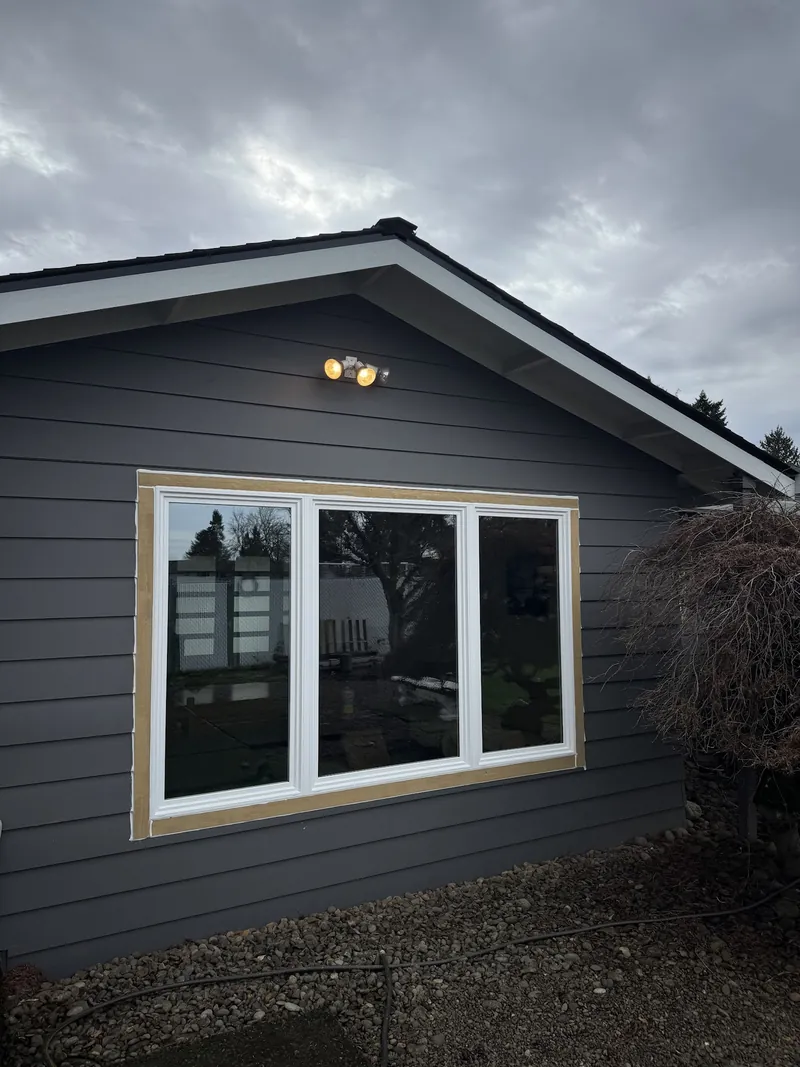
The most common painting job we do is the smallest: the trim around windows and doors we have just installed. New trim goes on as raw or primed wood. It gets caulked to the siding, primed if it came raw, and painted in the house’s existing trim color or a new one. When the siding around a changed opening was patched, the paint on the patch is feathered out to a corner or a trim line so there is no hard edge between new and old. It is a half-day job that decides whether a window replacement looks finished, and it is included when we do the windows.
Painting Different Sidings
Wood and hardboard
Wash, scrape, sand, replace rot, prime bare areas, two coats. Hardboard needs its bottom edges sealed, because that is where it drinks water.
Fiber cement
Comes primed from the factory and takes a 100% acrylic top coat. Field-cut ends are primed before the boards go up. New fiber cement is painted within the window the manufacturer specifies after installation.
Vinyl
Can be painted, in a color no darker than the original. Darker vinyl absorbs more heat and can warp. The paint has to be one formulated for vinyl, and the siding has to be clean and dull.
Stucco and masonry
Masonry primer and an elastomeric or masonry-rated acrylic. Cracks are filled first, and efflorescence is removed or the paint lifts.
Choosing a Color
Bring samples to the house, not the other way round. A color chip under showroom light looks nothing like the same color on a north wall in January. We paint sample patches on two elevations, you look at them at different times of day, and then you decide. If an HOA has to approve the color, the sample patch is what they will want to see, and we can supply the product details.
When to Paint
Late spring through early fall, when surfaces are dry and nights stay above the paint’s minimum application temperature. In Clark County that is a real window, not a rule of thumb, and it fills up. If you want the house painted this year, the visit and the quote should happen in spring so the job is on the schedule before the good weather is gone. Trim-only jobs after a window replacement can often be fitted in on the shoulders of the season.
Why Homeowners Choose IE Pro for Painting
- A carpentry crew paints the house. Rotten trim is replaced, not painted over. Soft sills and fascia are cut out and rebuilt before primer goes on.
- Prep is the job. Wash, scrape, sand, caulk, prime, then two coats. The quote says what is included so you can compare it.
- Scheduled for the weather. Dry months, dry surfaces, nights above the minimum. We will move a date rather than paint into rain.
- Finishes the windows and siding we install. Trim and new siding are primed and painted by the crew that installed them.
- Registered, bonded and insured. WA L&I general contractor registration IEPROE*797LN, active since June 2021.